Pop-up
For festivals, farmers markets, schools, and community events.
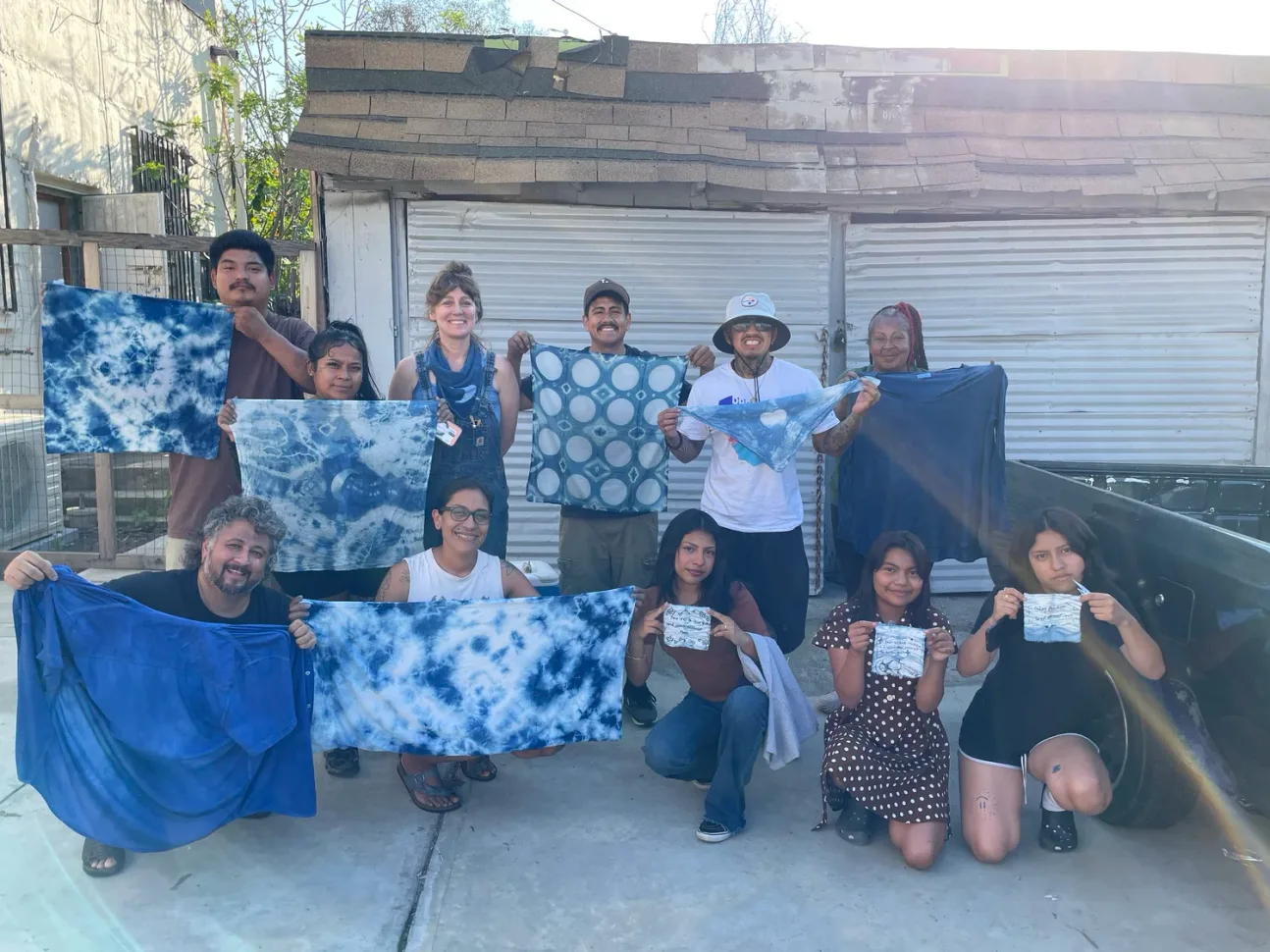
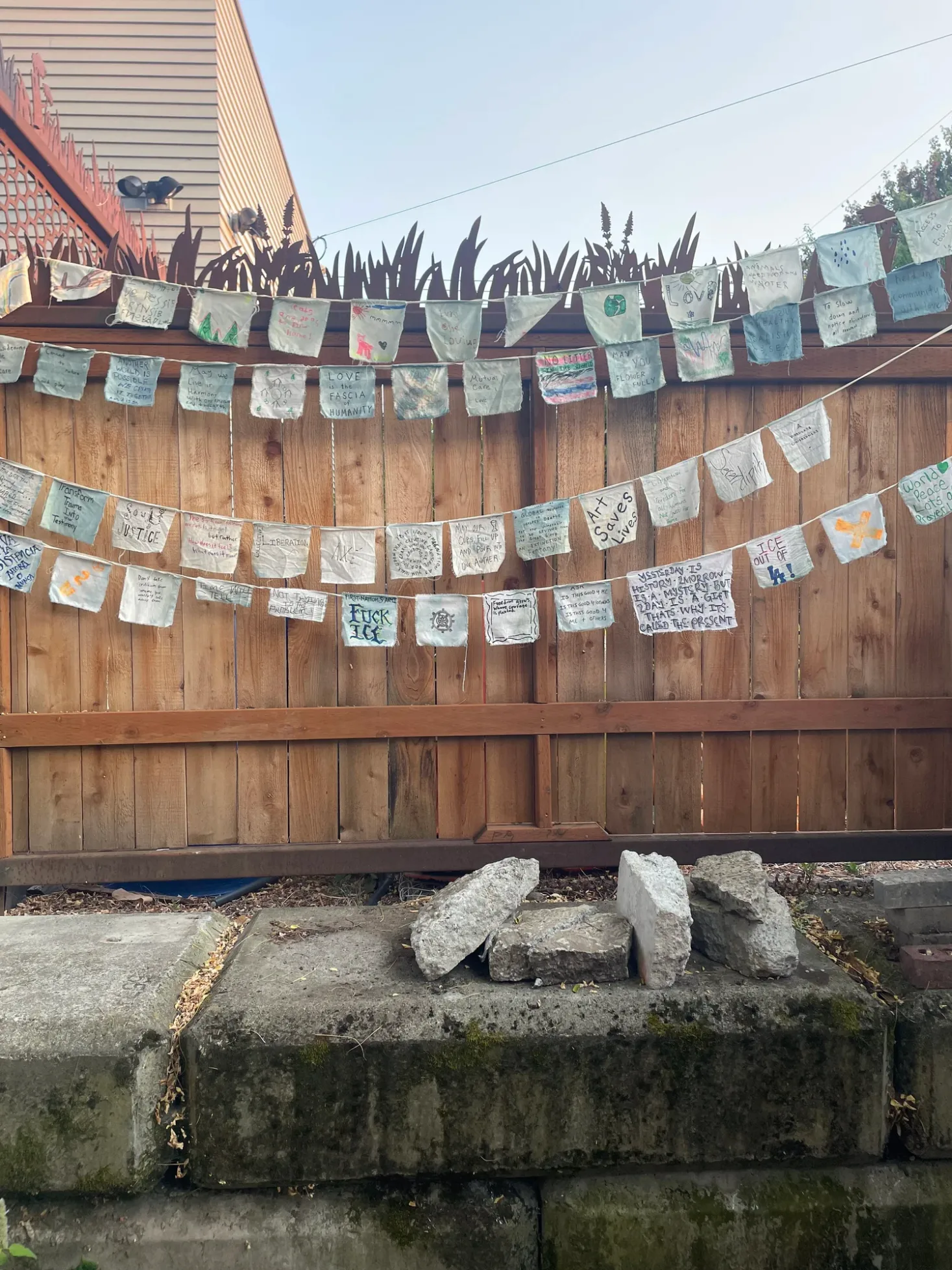
People join as they pass: write a wish, dye the flag, and add it to the collection.
[3-5 hours, 20-300 people over multiple hours, requires access to water and electricity ]
WORKSHOPS
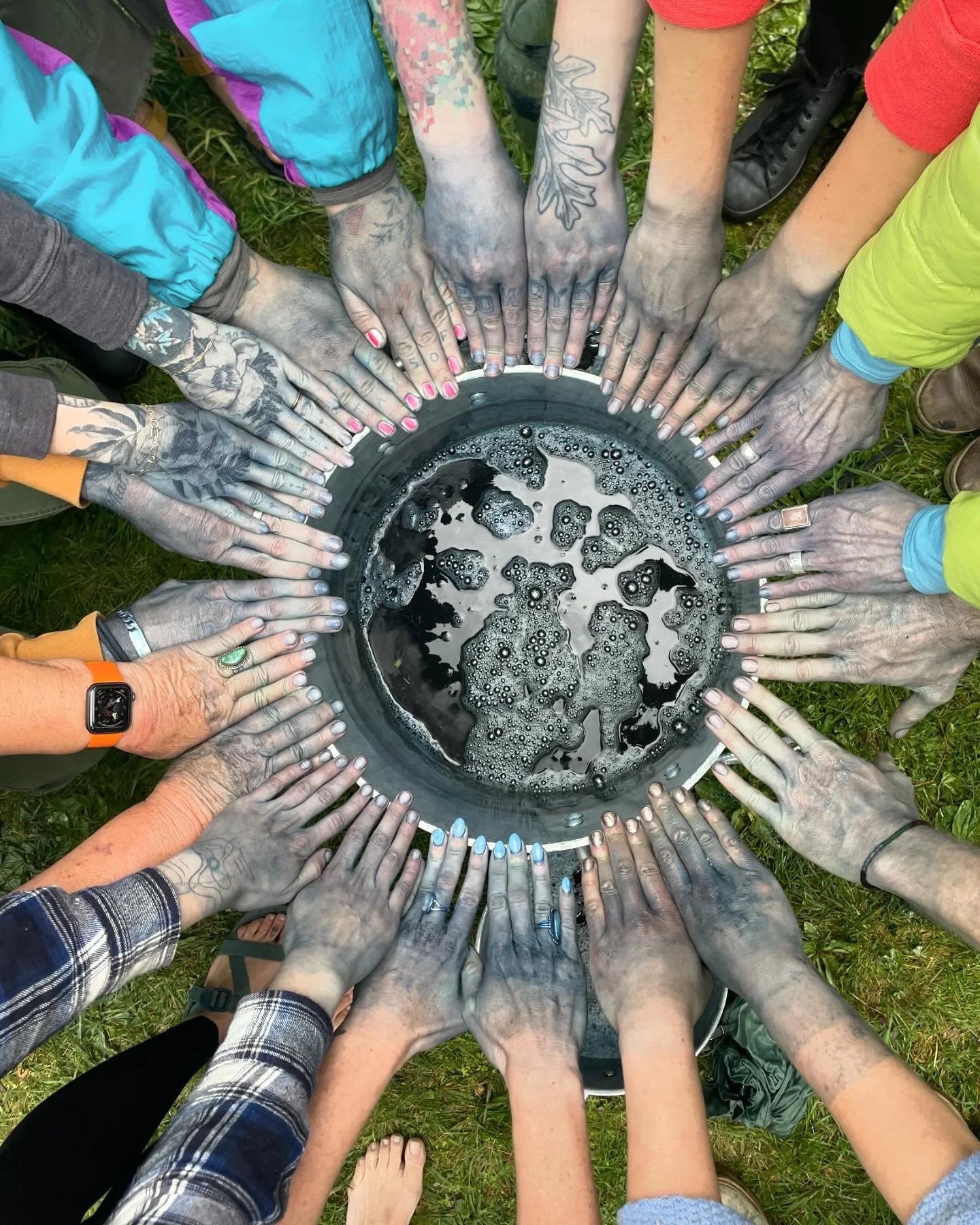
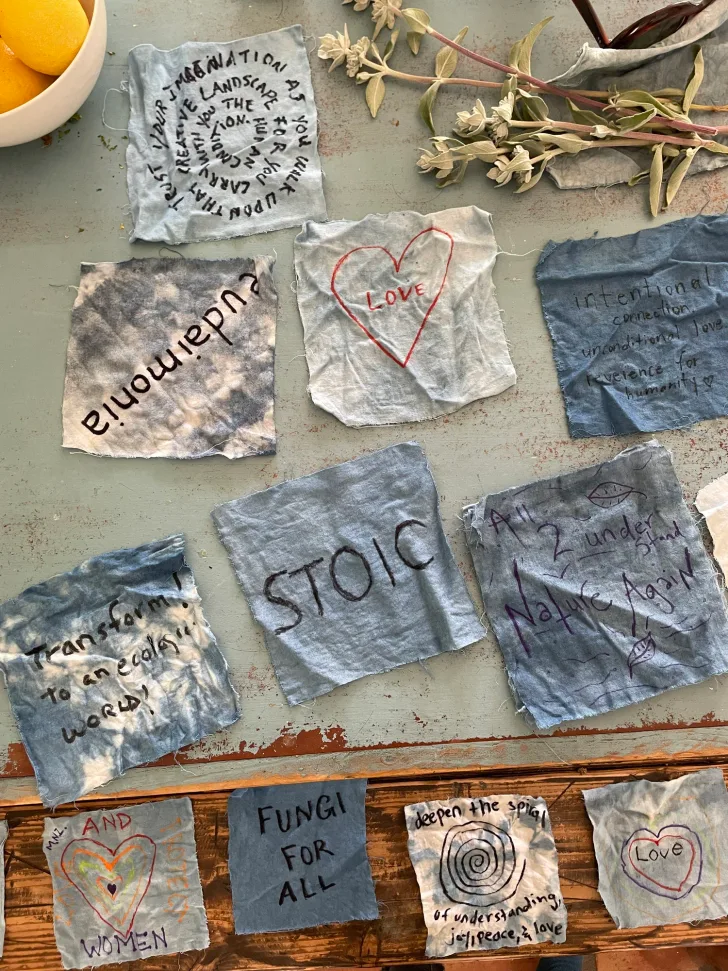
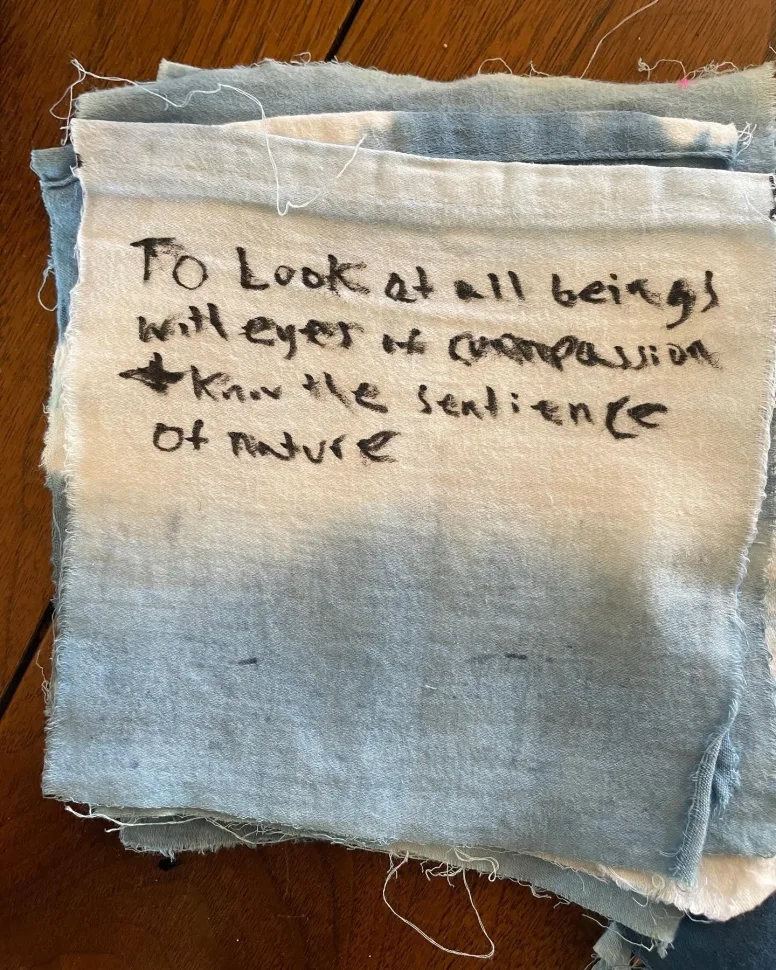
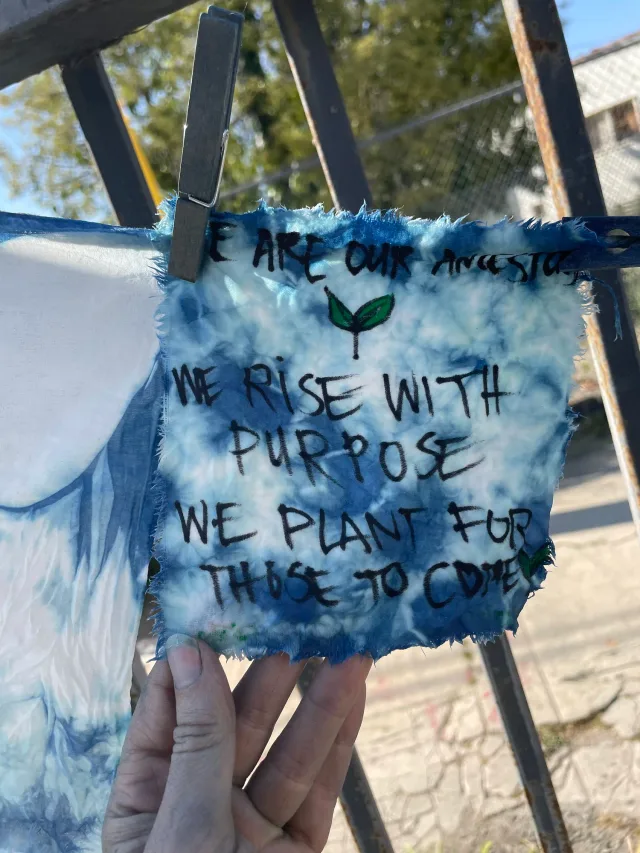
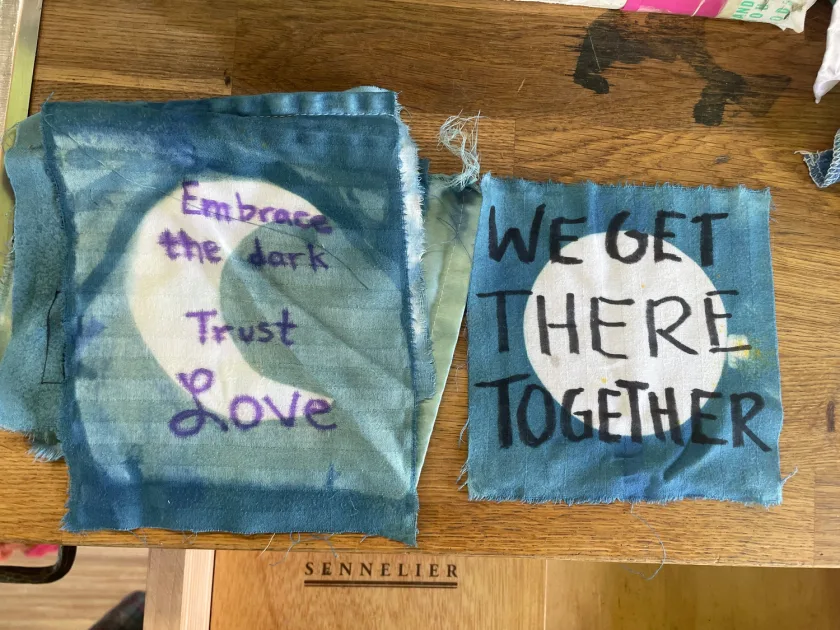
Indigo Spell is a community art project, indigo dye workshop, and contemplative practice. Participants imagine a kinder, fairer, more sustainable world and write those ideas on small white flags. Each flag is dipped into an indigo vat, where the white cloth turns green and then blue, a visual symbol of transformation. The flags are then sewn together with the hundreds of others collected over the project’s three years. Imagination shapes technology, policy, and the ideas that build our society. Indigo Spell is a chance to imagine the details of a more utopian world, in the belief that imagining is the first step toward making it real.
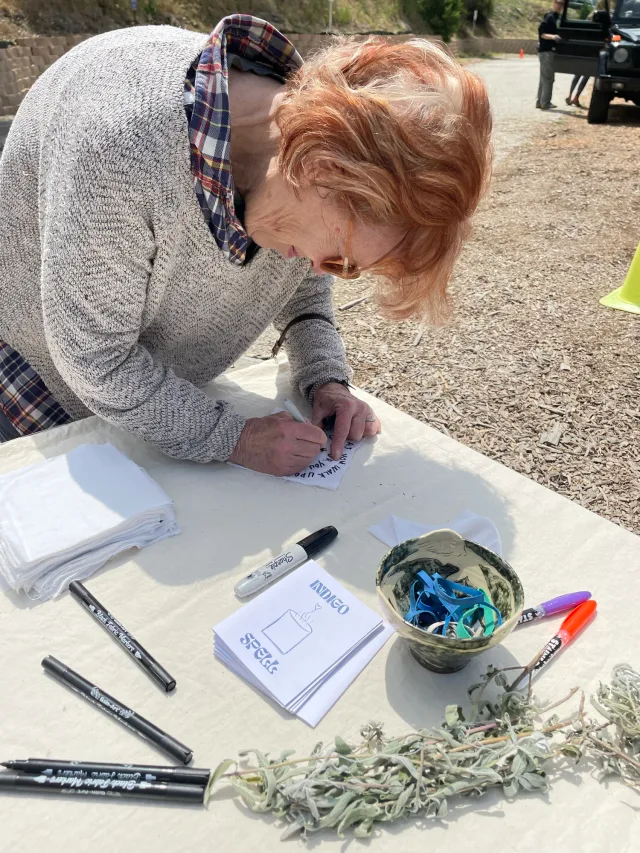
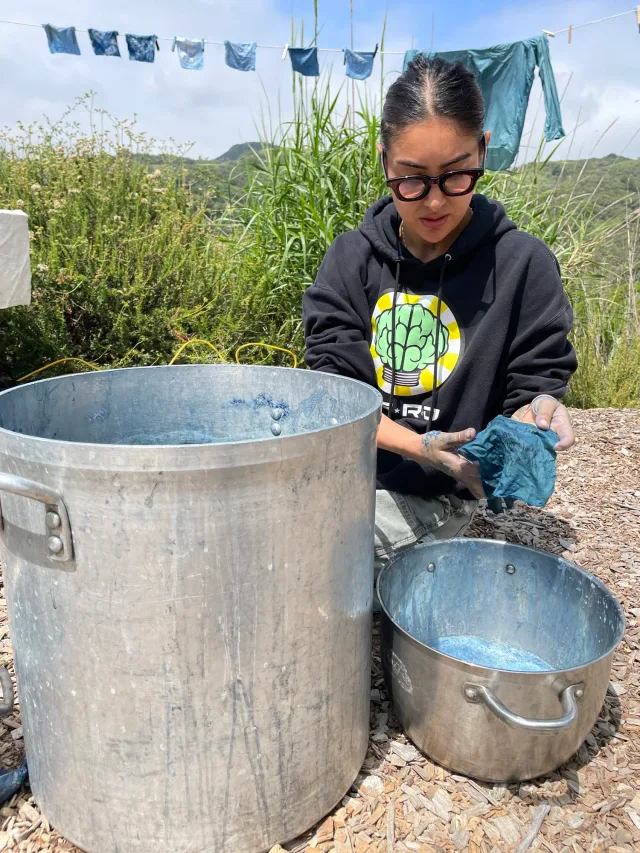
For festivals, farmers markets, schools, and community events.
People join as they pass: write a wish, dye the flag, and add it to the collection.
[3-5 hours, 20-300 people over multiple hours, requires access to water and electricity ]
For museums, art centers, schools, and community groups.
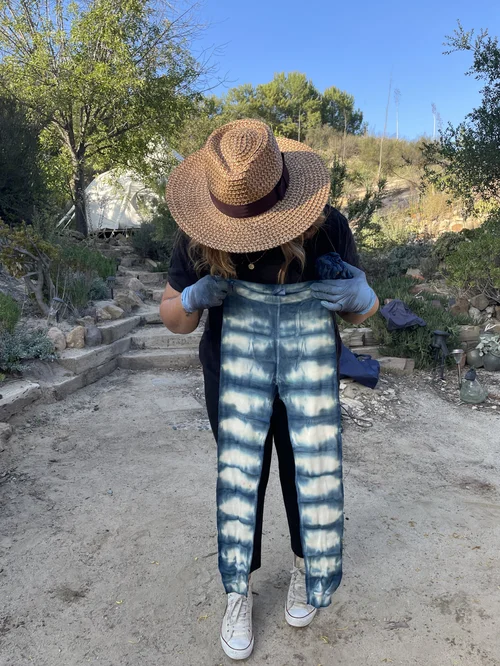
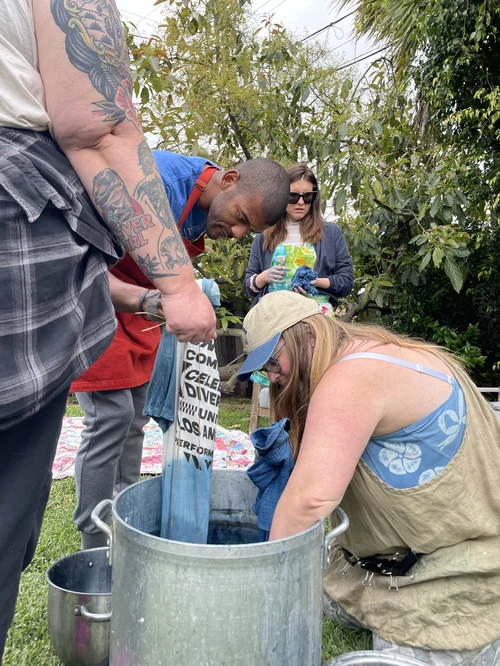
An introduction to making an indigo vat, plus the flag project. Participants make flags and dye one or two used garments or textiles, giving them new life through upcycling. For groups larger than 10, a host assistant helps.
[4 hours (plus hour prep and breakdown) 10 people max
For fellowships, universities, nonprofits, and organizations. Teenagers and adults. 10 to 20 participants (up to 30 with an assistant on Day 2).
Day 1 (3 to 4 hours) explores the expired stories in our shared world, guided by excerpts from Vanessa Machado de Oliveira’s Hospicing Modernity, along with guided visualizations and a conversation about what a more just and sustainable world could look like. We also look at past community activist art projects and the power of imagination.
Day 2 (4 to 6 hours, outdoors) is the science and practice of indigo dyeing: the folklore of the pigment, its history in relation to social justice, an organic indigo vat, and simple shibori and fold-resist techniques. Each participant writes two flags, one for the collective and one for personal transformation, and then dyes them. Participants then experiment on a textile they brought from home, and everyone takes home a zine with everything covered.
What participants learn (two-day)
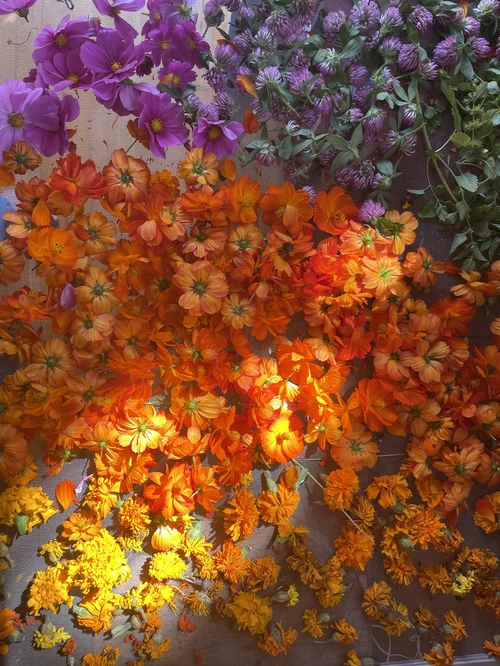
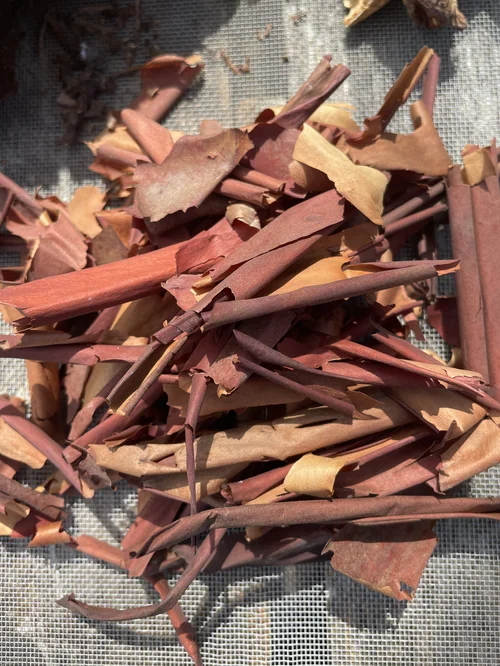
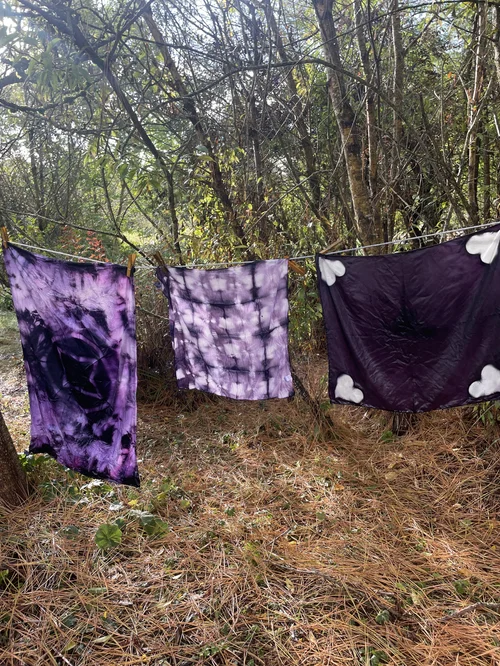
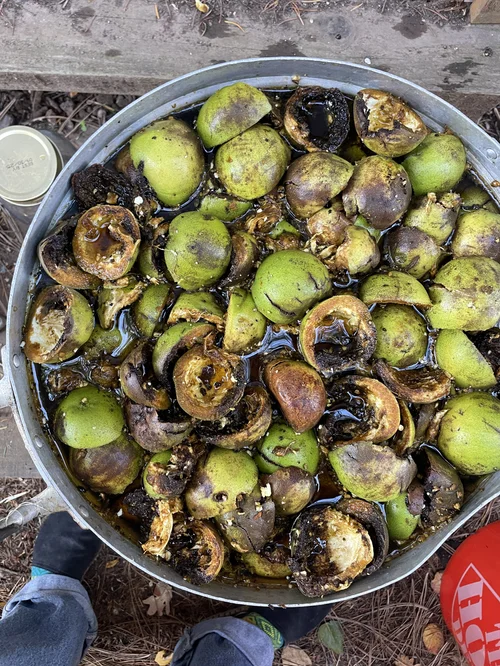
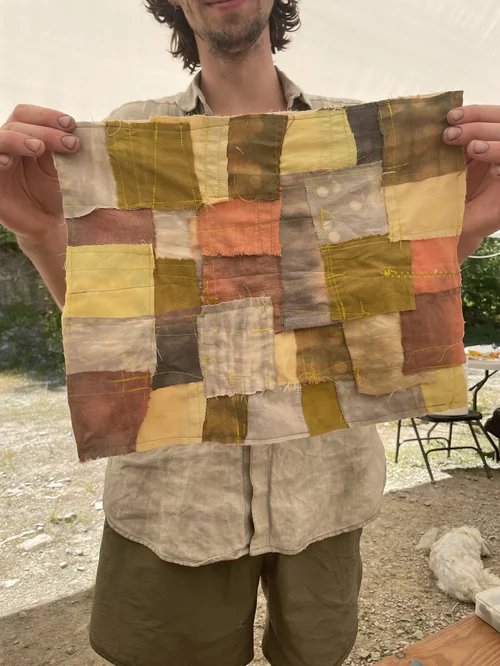
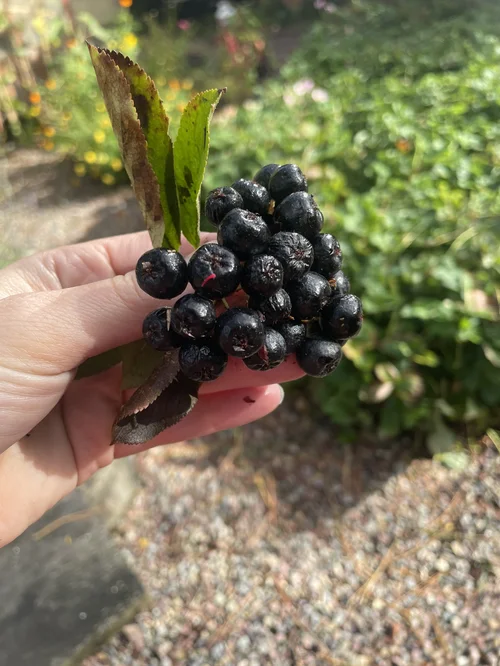
When possible, my workshops focus on locally grown and sustainably foraged color. These courses typically run late summer through fall and participants experiment with a range of local color on a variety of mordanted natural fibers. I also offer more technical based courses focused on mordants and modifyers, showcasing the broad color palette range available through modifyers, various fibers, and overdyeing. My mission as an educator is to facilitate creative community experiences which focus on repair, upcycling, and visioning a just and sustainable world.
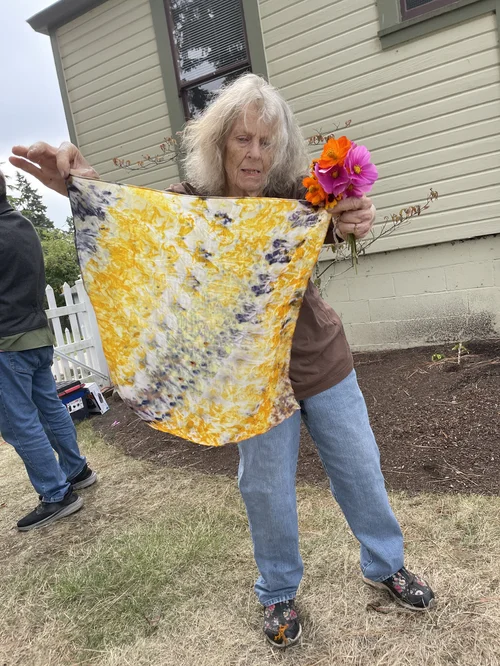
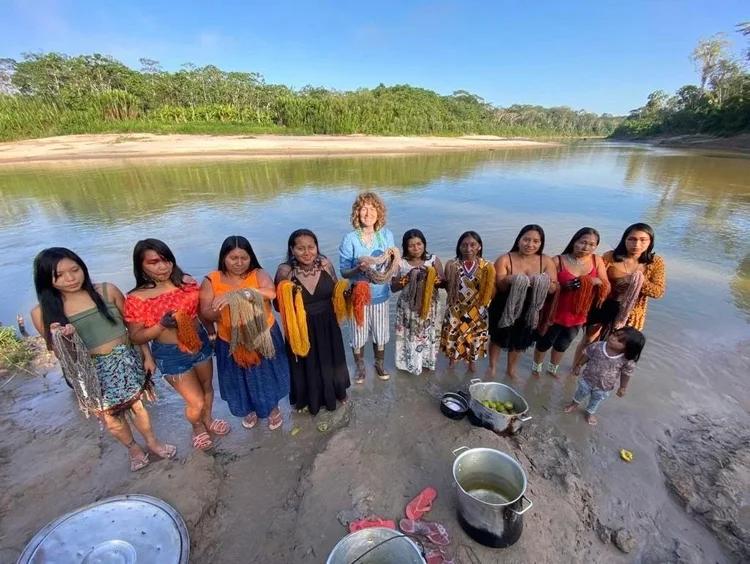
Sulai Lopez is a natural dyer, textile and installation artist, and costume designer. She teaches regularly at the La Conner Museum for Quilting and Fiber Arts and has led programs for ARTIVISM (Seattle), Green Arrow Co-Lab (Los Angeles), schools, and community organizations. She once led a two-day workshop in the Amazon at the request of master Huni Kuin artisans, on making their naturally dyed cotton colorfast using jungle foraged materials.
Reach out if you’d be interested in having Sulai teach at your company, collective, or institution.